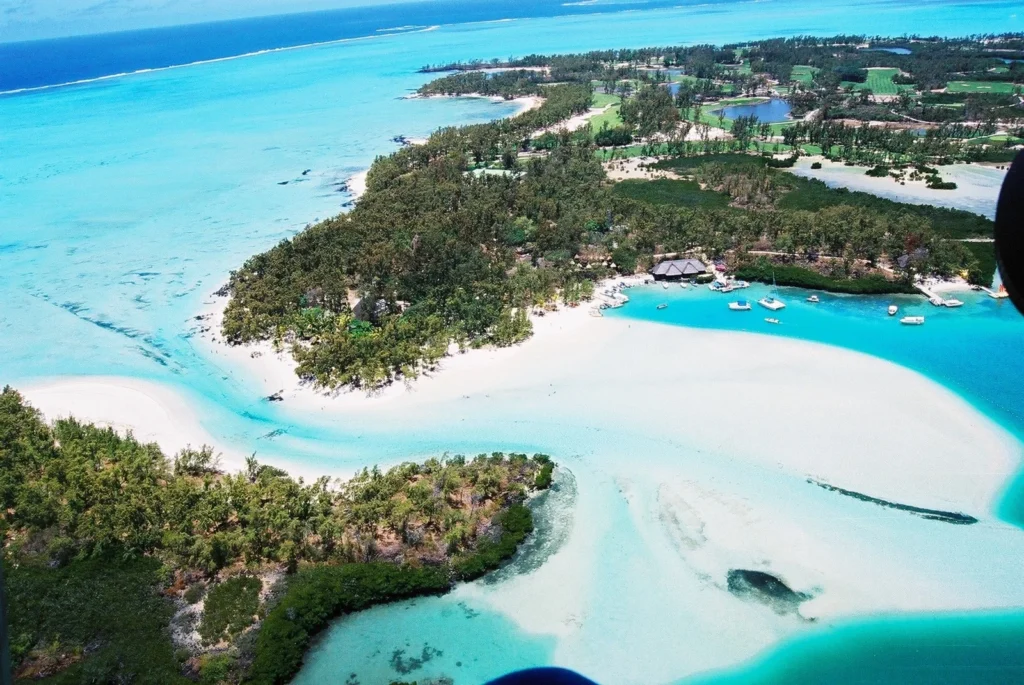
Few places in Mauritius are as well known as Île aux Cerfs. Every day, visitors cross the lagoon to spend time on its beaches, enjoy water activities or simply relax by the sea.
Yet one question surprises almost everyone: why is it called « Deer Island » when there aren’t any deer there?
The answer goes back more than 300 years and reveals a fascinating chapter of Mauritius’ history. Long before catamarans and speedboats brought travellers to the island, this quiet islet played a very different role.
Why Is It Called Île aux Cerfs?
The name dates back to the 17th century, when Dutch settlers introduced Javan rusa deer (Rusa timorensis) to Mauritius.
The animals adapted well to their new environment and gradually spread across the mainland and several nearby islets. One of those islands became known as Île aux Cerfs, literally meaning Deer Island.
For many years, deer were an important part of local life. Their meat was widely used in traditional Mauritian cooking, particularly in venison curry, known locally as kari cerf, a dish that is still enjoyed across the island today.
Over time, the deer disappeared from Île aux Cerfs itself. The name, however, remained, becoming one of Mauritius’ most recognisable place names—even though visitors will never actually see a deer there today.
More Than One Island
Many people picture Île aux Cerfs as a single island, but it’s actually made up of two separate land masses.
The larger southern island is where visitors spend most of their day, while Îlot Mangénie lies to the north. The two are separated by a sandbank that becomes more visible depending on the tide.
Although most excursions focus on the main island, this unique layout is part of what gives the area its distinctive landscape.
Before Tourism, There Were Traditional Pirogues
Long before organised excursions existed, the island was reached in a much simpler way.
Residents of Trou d’Eau Douce, the nearest coastal village, crossed the lagoon in traditional wooden pirogues used for fishing and local transport.
Tourism began to grow during the 1970s, helped by the development of Mauritius’ east coast and the opening of the Touessrok Hotel in 1978, now the Shangri-La Le Touessrok Mauritius.
As international tourism expanded, traditional crossings gradually gave way to organised boat trips. Today, visitors can choose between full-day catamaran cruises and direct speedboat excursions, making the island accessible to travellers from around the world.
Why Has Île aux Cerfs Become So Popular?
Its history explains the name, but its geography explains its success.
Île aux Cerfs sits inside Mauritius’ largest lagoon, protected by a coral reef. This natural barrier creates calmer waters than many other parts of the coastline, making boat trips generally more comfortable throughout the year.
The island is also one of the largest excursion islands in Mauritius, covering approximately 87 to 100 hectares according to available sources. Its size allows visitors to spread out across several beaches, walking paths and leisure areas rather than gathering in a single location.
These practical advantages have helped make Île aux Cerfs the country’s best-known island excursion for decades.
A Name That Preserves a Piece of Mauritian History
Today, the deer are gone, but the story behind the name lives on.
For many visitors, learning why Île aux Cerfs is called « Deer Island » adds another dimension to the experience. It’s a reminder that this famous destination is more than just beautiful beaches, it also reflects centuries of Mauritian history, from Dutch settlement and traditional village life to the development of modern tourism.
If you’re planning to visit, you can choose between a full-day catamaran cruise, where the journey across the lagoon is part of the experience, or a direct speedboat tour that gives you more time to explore the island itself.
Whichever option you choose, you’ll be visiting a place whose story began long before the first excursion boats ever crossed the lagoon.